A petroleum fill cap must match the tank connection, seal against the stored product, withstand the installation environment, and work alongside the tank’s venting and overfill controls. By comparing thread form, materials, sealing parts, operating limits, maintenance, and delivered cost, you can decide whether a Qinn cast iron cap is suitable or whether another closure is the safer choice.
Key takeaways
- Match the Qinn part number and drawing to your tank connection.
- Isolate the tank, remove ignition sources and verify vapour safety first.
- Compare cast iron, aluminium and steel by corrosion, impact and maintenance needs.
- Request coating, gasket, test and warranty evidence with every Mumbai quotation.
Will the Qinn cap fit your tank connection?
Do not order by nominal size or a catalogue photograph. Confirm the exact Qinn part number or dimensional drawing against your tank connection; a cap advertised as a Qinn cast iron fill cap in Mumbai is not proven interchangeable by its name alone.
- Record the tank connection’s nominal inlet and outlet sizes, thread outside diameter, pitch, thread length, overall height clearance, and tank-neck or mounting-hole dimensions. Photograph the connection beside a ruler and measure undamaged threads.
- Match the thread designation exactly. NPT follows ASME B1.20.1; BSPT follows ISO 7-1; BSPP parallel threads follow ISO 228-1. BS 21 alone is incomplete unless the supplier states the exact size and whether each male or female connection is parallel or tapered. NPT and BSP can engage for part of a turn and still leak or damage the threads.
- Request the drawing showing thread dimensions, sealing face, cap height, and any bolt-circle details. Ask for the cast-iron grade, coating, gasket compound, temperature and pressure or vacuum limits, and the petroleum products approved for service.
- Reject the match if the drawing omits thread form, the gasket does not suit your fuel, or the cap is intended only for an atmospheric tank while your connection sees pressure or vacuum. Ask for a material or test certificate and replacement-gasket details before payment.
A supplier of a Qinn cast iron fill cap in Mumbai should confirm these points in writing. The fill cap closes the filling connection; it does not replace a normal vent, emergency vent, pressure-vacuum vent, or overfill device.
How should you install a petroleum fill cap safely?
A cap that fits the pipe can still fail the installation. Confirm the exact drawing, nominal inlet and outlet sizes, thread diameter and pitch, overall height, tank-neck or mounting-hole dimensions, and clearance inside the spill bucket or containment sump.
For a petroleum fill cap in mumbai, require the Qinn part number and verify whether the connection is parallel or taper BSP; do not confuse BSP with NPT.
1. Isolate the tank, stop filling, control ignition sources, and follow the site’s permit-to-work and bonding procedures before opening the connection.
2. Inspect the neck, threads, gasket seat, cap, and gasket. Remove dirt, old sealant, rust, and burrs without damaging the sealing surface.
3. Apply only a thread sealant approved for the stored petroleum product and compatible with the gasket. Keep sealant out of the tank and do not use it to compensate for damaged or mismatched threads.
4. Fit the gasket, orient the cap correctly, and tighten it by hand before using the specified tool. Stop if it cross-threads; never force a BSP fitting into an NPT connection.
5. Fill gradually, then inspect the joint, gasket, drain path, and containment area for seepage. Correct a leak after depressurising and making the area safe.
The cap does not replace a normal vent, emergency vent, pressure-vacuum vent, or overfill-prevention system. Confirm the complete tank and fill arrangement against site approvals and PESO requirements; material alone does not establish acceptance. Check the cap’s product, temperature, pressure, and vacuum limits before service.
How does cast iron compare with other tank-cap materials and designs?
A threaded gray cast-iron cap is a strong value choice for an atmospheric petroleum tank fill point that stays closed between occasional filling operations. Its rigid body resists routine handling, but a vehicle-accessible location, dropped tool, cross-threading, or side impact can crack gray iron instead of merely bending it.
| Material or design | Advantage over cast iron | When cast iron is preferable |
|---|---|---|
| Aluminium | Lighter and easier to handle; dents more readily and needs attention to galvanic compatibility | Weight is unimportant and the cap remains protected |
| Ductile iron | Much better impact and deformation resistance | The fill point has low traffic and cost matters |
| Stainless steel | Strong corrosion resistance; higher purchase cost | The environment is not severely corrosive and coating is adequate |
| Fabricated steel | Tough, repairable, and impact-tolerant; exposed steel needs corrosion protection | The cap will not face vehicle or tool impact |
| Quick-fill closure | Faster opening for frequent deliveries; requires a positive lock and petroleum-rated seal | Filling is occasional and a threaded closure will remain undisturbed |
| Cam-and-groove | Rapid hose connection; coupling halves must match and cannot replace a missing tank seal | You need a simple fixed fill cap rather than repeated hose connection |
| Bolted closure | Even gasket compression and resistance to casual opening; removal takes tools and time | Routine access is infrequent and quick filling is not important |
Compare the gasket, not just the body: require its compound, fuel compatibility, temperature range, and replacement availability. Select a tougher material or faster design when impact, repeated access, or delivery speed outweighs the cast-iron cap’s economy.
What service, coating, and gasket evidence should you require?
A catalogue photograph and “4-inch” label prove neither petroleum suitability nor interchangeability. Ask a fuel tank fill cap dealer for traceable documents tied to the quoted part number, then compare the stated limits with your actual product, temperature, pressure, moisture, and maintenance exposure.
- Material or test certificate identifying the cast-iron grade, plus the dimensional drawing and thread designation.
- Service limits naming compatible fuels and additives, maximum and minimum operating temperature, and allowable pressure or vacuum. Reject a cap described only as “petroleum” if your tank handles blended fuel, contaminated product, or pressure beyond atmospheric storage.
- Coating specification stating the internal and external system, surface preparation, application method, and intended exposure. Check immersion resistance inside the neck, atmospheric moisture outside, and underground soil or water exposure where applicable.
- Gasket specification naming the compound, temperature range, fuel-compatibility evidence, and sealing method. Request replacement gaskets and confirm availability; a sound body with a swollen or hardened gasket still leaks.
- Locking hardware and fastener material suitable for rain, salt, washdown, and repeated opening. Ask how the coating and gasket survive the planned inspection and filling cycle.
- Batch or serial traceability, inspection records, and written confirmation of replacement-part dimensions.
For an Indian regulated petroleum facility, verify the complete tank, fill arrangement, fittings, and installation against Petroleum and Explosives Safety Organisation requirements and site approvals. Cast iron alone does not establish PESO acceptance. Insist that the quotation identifies every included component, not merely the body.
How should you compare Mumbai quotations for a Qinn fill cap?
Compare quotations on a defined specification and delivered scope, not on “50 mm” or another nominal size. The qinn fill cap price is meaningful only when every supplier quotes the same connection, material, gasket, coating, locking arrangement, quantity, and destination.
Ask the cast iron fill cap supplier in Mumbai for:
- Exact Qinn part number or drawing, including thread designation, diameter, pitch, overall height, and mounting dimensions.
- Material grade or test certificate, gasket material and availability, coating system, and locking-hardware details.
- Petroleum-service suitability, temperature limits, pressure or vacuum limits, and confirmation that the cap does not replace tank venting or overfill protection.
- A commercial quote showing gasket, inspection documents, freight to Mumbai, packing, taxes, delivery time, warranty, and replacement parts.
Navkar Enterprises -Texas Valves (India) can help separate a Qinn identification from a generic catalogue photograph by checking the offered drawing and document set against your tank connection.
| Item | Compare in every quotation | Why it matters |
|---|---|---|
| Identity and fit | Part number, drawing, thread type, pitch, height, mounting details | A nominal size does not prove interchangeability |
| Materials | Cast-iron grade, gasket compound, fastener material | Fuel, moisture, and corrosion affect service life |
| Protection | Coating specification, surface preparation, drainage compatibility | Mumbai humidity and saline exposure attack threads and unprotected iron |
| Scope and cost | Gasket, lock, certificates, freight, taxes, delivery, spares | A low ex-works figure can become the costliest delivered option |
Related products
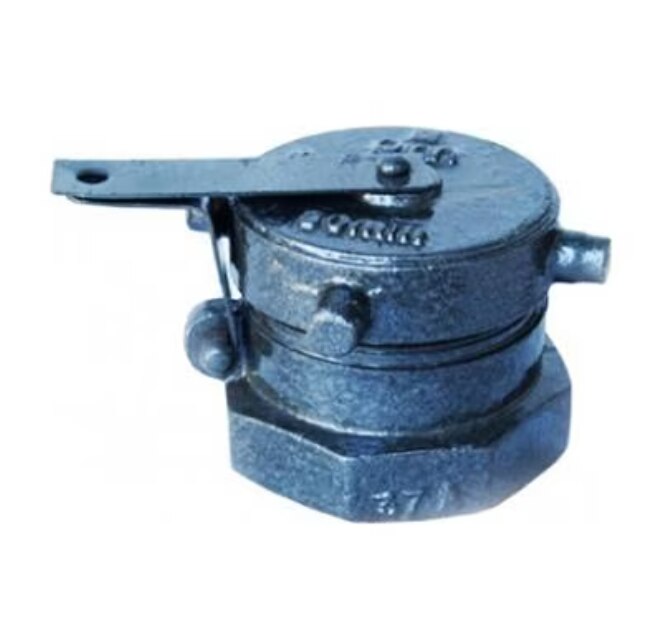
 | Petroleum Products Q-78 – Qinn CAST IRON FILL CAP PRODUCT DETAILS TANK MOUNTING WITH CAP & LOCKING ARRANGEMENT END DETAILS OUTLET :- FEMALE BSP AS TO BS:21 INLET :- MALE BSP AS TO BS:21 WORKING... View product → |
 | Petroleum Products PRODUCT DETAILS TANK MOUNsTING WITH CAP & LOCKING ARRANGEMENT END DETAILS MOUNTING THREADS BSP TO BS:21 WORKING SUITABLE FOR FLUID TANKS TO CHECK THE... View product → |
Frequently asked questions
Will a Qinn cast iron fill cap fit any petroleum tank connection?
No. Match the Qinn part number or dimensional drawing against the connection size, thread or flange pattern, sealing face, cover clearance and gasket dimensions. Nominal size and a catalogue photograph do not prove interchangeability.
How should you install a petroleum fill cap safely?
Use trained personnel, isolate the tank and filling line, control ignition sources, and confirm that pressure and vapour hazards are controlled before opening the cap. Clean the sealing face, fit the specified gasket, tighten the cap without cross-threading, and inspect for leaks after installation.
Is cast iron better than other petroleum tank-cap materials?
Cast iron offers rigidity and impact resistance at a practical cost, but it is heavier and needs suitable corrosion protection. Compare it with aluminium or steel for weight, corrosion exposure, mechanical loading, temperature, gasket retention and replacement requirements.
What evidence should a supplier provide for a Qinn fill cap?
Request the exact part number, dimensional drawing, material description, coating specification, gasket material and size, pressure or service limitations, inspection records, and warranty terms. Check that the documents identify the supplied item rather than a similar photograph.
How should you compare a Qinn fill cap quotation in Mumbai?
Compare the complete delivered specification, not only the Qinn fill cap price. Check whether the quote includes the gasket, coating, taxes, delivery, inspection documents, warranty, lead time and return terms, then verify the supplier's stock against the required part number.
Related product
 | Qinn Petroleum Valves Available At Navkar Enterprises Nagdevi Mumbai Qinn petroleum application valves Fill cap , Dip cap , Breather valve etc...available at navkar enterprises mumbai... View product → |
Keywords