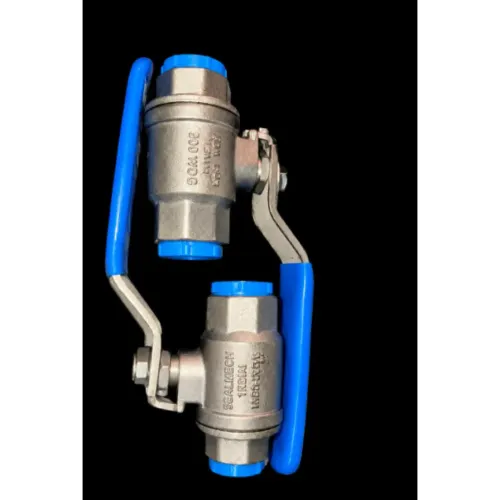
Industrial fluid systems can expose valves to moisture, chemicals, process media, repeated operation, and demanding environmental conditions. In applications where material compatibility and corrosion resistance are important, SS ball valves are frequently evaluated as an alternative to valves manufactured from other materials.
The decision should be based on the actual service environment rather than stainless steel being treated as a universal solution.
Why Stainless Steel Is Used in Ball Valves
Stainless steel offers useful mechanical and corrosion-resistant properties, although performance differs according to stainless steel grade and operating environment.
An SS ball valve combines these material characteristics with quarter-turn ball-valve operation. This can provide a compact method of isolating flow in compatible systems.
Applications may include chemical processing, water treatment, food-related processing equipment, utilities, manufacturing plants, and selected process pipelines.
Mumbai's broad industrial base means valves may be exposed to very different operating environments, making material identification particularly important during procurement.
SS 304 and SS 316 Are Not the Same
A valve described simply as 'stainless steel' does not provide enough information for many industrial applications.
SS 304 is commonly used across general industrial applications, while SS 316 contains additional alloying elements that can provide improved resistance in certain corrosive environments.
That does not mean SS 316 is automatically required everywhere.
The choice should consider:
- Process fluid
- Chemical concentration
- Operating temperature
- External environment
- Cleaning chemicals
- Pressure conditions
- Applicable engineering specifications
Material compatibility data and project requirements should guide the final selection.
Full Bore and Reduced Bore
Ball valves can also differ internally.
A full-bore valve has a bore designed to provide a relatively unrestricted flow path compared with reduced-bore configurations. Reduced-bore designs have a smaller internal passage.
The choice can affect pressure drop, flow characteristics, valve dimensions, and cost. Pipeline engineers therefore need to consider more than the nominal valve size.
Seals and Seats Matter Too
Stainless steel construction does not mean every internal component is stainless steel.
Seats, stem seals, packing, and other components may use different materials. Their compatibility with process media and temperature conditions can be just as important as body material.
Industrial purchasers in Mumbai and elsewhere in Maharashtra should therefore review the complete valve specification.
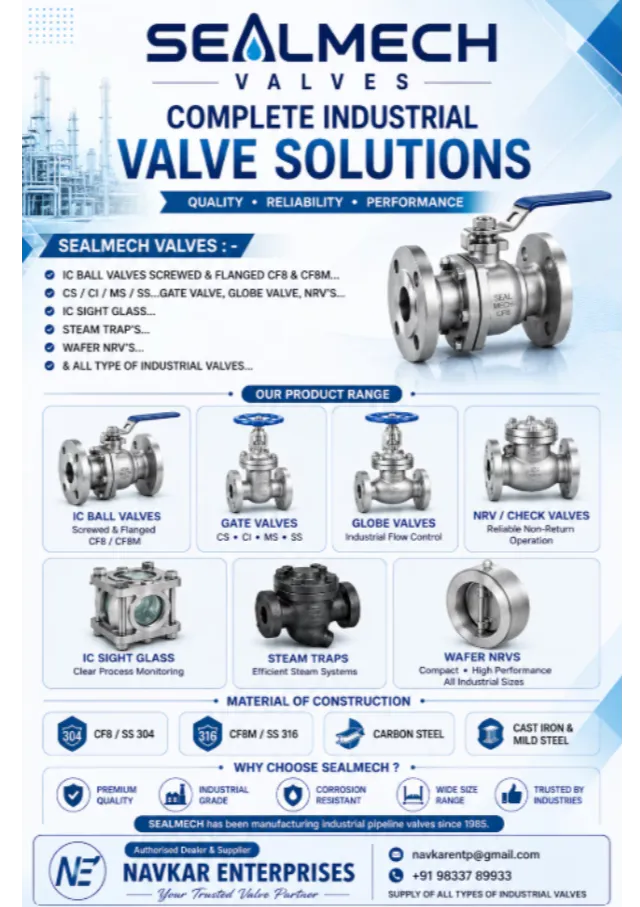
When requirements are shared with a valve source such as Navkar Enterprises - Texas Valves, details including stainless steel grade, size, pressure class, media, temperature, bore configuration, connection type, and operating method help narrow the selection.
SS ball valves can provide dependable isolation in many demanding systems, but the strongest specification is one based on complete operating conditions rather than the broad description 'stainless steel valve.'
Keywords