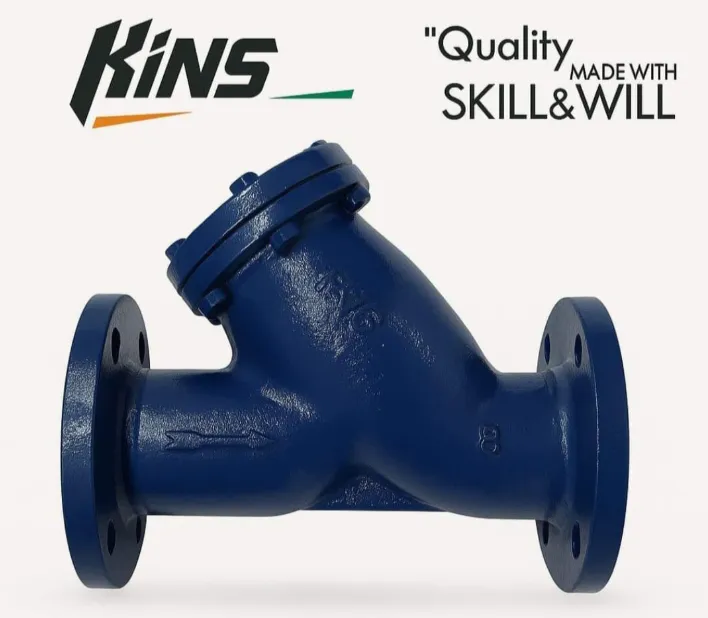
Contaminants circulating through a pipeline can interfere with valves, meters, pumps, control equipment, traps, and other downstream components. Y type strainers provide a relatively simple method of capturing solid debris from compatible flowing media before it reaches sensitive equipment.
Selecting the right strainer involves considerably more than choosing a matching pipe diameter.
Understand What the Strainer Must Remove
A Y strainer contains a screen that traps particles while allowing the process medium to continue through the pipeline.
Before selecting one, consider what type of debris may be present.
Rust scale, welding residue, pipe debris, and other solids can differ significantly in size. The screen specification should therefore reflect the protection requirements of downstream equipment and acceptable pressure loss.
A very fine screen is not automatically better. Finer filtration can increase resistance and may require more frequent cleaning.
Check Body and Screen Materials
The strainer body must be compatible with the process medium, pressure, temperature, and surrounding environment.
Screen material is equally important because the screen is continuously exposed to the fluid and collected debris.
Industrial applications may require different material combinations depending on whether the system handles water, steam, air, oil, chemicals, or another compatible medium.
Review Pressure Drop
As material collects on the screen, resistance can increase.
Maintenance teams therefore need a practical method for monitoring and cleaning the strainer. Allowing a screen to become heavily blocked can adversely affect system flow.
For critical installations, the maintenance plan should establish suitable inspection or cleaning intervals based on actual service conditions.
Installation Details Buyers Often Miss
Before purchasing, verify:
- Flow direction
- Nominal pipeline size
- Pressure class
- Operating temperature
- Body material
- Screen material
- Screen opening or mesh requirement
- End connections
- Cleaning access
- Blow-off or drain arrangement where applicable
The installation must also provide sufficient clearance for removal of the screen.
This detail is easy to overlook in compact plant rooms and congested industrial piping layouts commonly encountered in Mumbai.
Select Around the Equipment Being Protected
A useful approach is to work backward from the downstream component.
If the strainer is protecting a control valve, steam trap, meter, pump, or other equipment, identify what particle size and flow conditions that equipment can tolerate. The strainer specification can then be developed accordingly.
For Mumbai businesses sourcing industrial strainers, Navkar Enterprises - Texas Valves can be approached with details covering medium, size, pressure, temperature, material, connection, and filtration requirements.
Y type strainers are relatively simple components, but their effect on downstream reliability can be significant. Correct screen selection, installation access, and regular cleaning are what turn a basic strainer into an effective part of pipeline protection.
Keywords